A Delphoi Stadion: Az Ókori Görög Atlétika Színtere
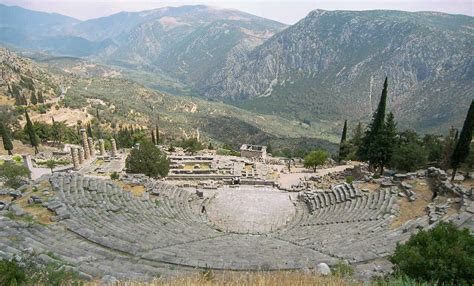
A Delphoi jósda az ókori görög civilizáció egyik legnagyobb jelentőségű vallási és kulturális központja volt, amely még ma is lenyűgözi a történelem és a mítológia iránt érdeklődőket. Delphoi ókori fontossága nem csupán spirituális, hanem politikai és közösségi szempontból is meghatározó volt. Delphoi a Parnasszus-hegység lábánál fekvő antik város. Régen Görögország legszentebb helyei közé tartozott, amelyet hatalmas urakodók és szegény vándorok egyaránt felkerestek, hogy a jósdában tanácsot kérjenek Pýthia papnőtől. Delphoi legmagasabb pontján megtekinthető a stadion, ahol a Pýthia?játékok zajlottak. A stadion a terület legmagasabb pontján épült, közvetlenül a színház felett, a Phaedriads és az Agios Ilias-hegy között, az Apolló-templomtól északnyugatra.
Építés és Fejlődés
The stadium of Delphi, situated at the highest spot of the area, must have been built in the second half of the 4th century B.C. or even after the victory against the Galatians. Inscriptions attest that it was called “the pythikon stadion”, i.e. the Pythian stadium. It seems that from the time of its construction, dated t the second half of the 4th or the first half of the 3rd century B.C., started taking place there the “gymnastic” contests, i.e. the track and field sports, whereas musical performances or contests must have taken place as well, according at least to a 2nd century B.C. inscription, referring to the performance of a hymn “for the god and the Greeks” by Satyr the Samian with accompanying sounds of the guitar.
Ithis site have been discovered traces of 6th century B.C. buildings as well as fountains. Upon reaching the stadium, on the eastern end of the support wall, one sees an inscription forbidding to take out of the building the wine which was destined for sacrifices. The interpretation of the inscription is somewhat ambiguous, whereas it is not certain that this was its original position.
A Delphoi Stadion, the best preserved stadium in Greece, presents at least four different phases. These phases mutatják be az építmény folyamatos fejlődését és adaptációját az évszázadok során:
| Fázis | Időszak | Jellemzők |
|---|---|---|
| 1. fázis | I.e. 4. század vége vagy i.e. 275 körül | The first one dates to the end of the 4th century B.C. or slightly after the victory over the Galatians, i.e. around 275 B.C., to coincide with the beginning of the celebration of the Soteria. Initially, it must have allowed up to 20 athletes to compete simultaneously on the same number of tracks. Starting points were made of stone, marble initially. |
| 2. fázis | I.e. 3. század közepe előtt | The number of tracks was reduce to 17. Starting points later made of limestone. |
| 3. fázis | I.e. 100 körül | In ca 100 B.C. were added the spectators’ tiers on the southern side. |
| 4. fázis | Római kor | Finally, what we see today corresponds to the fourth phase of the stadium, comprising the revetment of the spectators’ seats wiith stone. |
Így épült fel a MOL Aréna négy év alatt | Štyri roky výstavby MOL Arény
Felépítés és Kapacitás
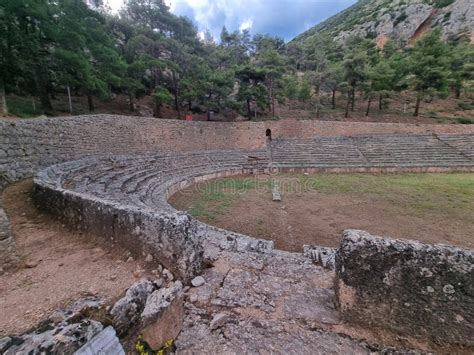
The northern side of the stadium lies against the slope, taking advantage of the natural inclination of the ground. The embankments of the southern side are supported by a terrace. It was about 178 meters long and on its both sides were raised banks for the spectators, consisting initially of battered earth, later on, though, made of stone and possibly of marble in the Roman period, through a donation by Herod Atticus, according to Pausanias. Initially the stadium was 178,35 meters long, corresponding to a Pythian stadium, whereas its width on the eastern end is 25.25 meters, on the west end 24.65 meters and in the centre 28.5 metres.
In the Roman period the track was raised and the length was reduced to 177, 414 meters. The embankments were formed along the long sides and met at the semicircular sling. Yet, they didn’t reach up to the spectators’ level, but they stepped on a crepis 1.30 meters high. On the northern side are preseved 12 rows of seats divided by staircases in 12 tiers. The highest corridor is preserved by a wall made of plain rocks, mainly against the rock falls. To the west lies the sling with six rowns of seats, divided in 4 tiers. On the souther side the support walls and the tiers it supported have now collapsed.
Pausanias mentions that Herod Atticus revetted the tiers with marble, but what we see today is limestone. It seems that an attempt at marble revetment might have been done, but was not completed due to the death of the great sponsor of the arts. A stadion total capacity of the stadium was about 6500, but other sources suggest it could accommodate over 7,000 spectators.
Az Atlétikai Események Központja
Built in the 5th century BCE, the Delphi Stadium was not only the site of the Pythian Games but also a central gathering place for athletic competitions, musical performances, and religious festivals. Explore the Ancient Theater, offering breathtaking views of Mount Parnassus, and visit the Athletes' Stadium, where the prestigious Pythian Games took place. With a seating capacity for over 7,000 spectators, it reflects the importance of physical prowess and cultural expression in ancient Greek society. Until then the track sports and the horse and chariot races took place at another site, possibly on the plain below Delphi, whereas workshops seem to have occupied the present site.
On the eastern side is preserved almost intact the starting line, with two rows of slabs bearing incisions for the feet of the runners and with rectangular cavities for supporting the hysplinx. To the east of the starting line have been discovered four pillars which supported the monumental entrance.
Hanyatlás és Megőrzés
The stadium was abandoned in 394 A.D. Cyriacus of Ancona writes that, when he visited Delphi in 1438, the stadium was almost intact. However, years passed by and it was covered with earth and used as a pasture.
The Stadium of Delphi remains one of the best preserved stadiums in Greece, offering a vivid glimpse into the athletic and cultural life of ancient Delphi.
Látogatási Információk
Access to the stadium is included with your Delphi tickets, providing entry to both the stadium and the rest of the archaeological site. A Delphoi jósda környéke ma az UNESCO Világörökség része.
tags: #gorog #delphoi #stadion